
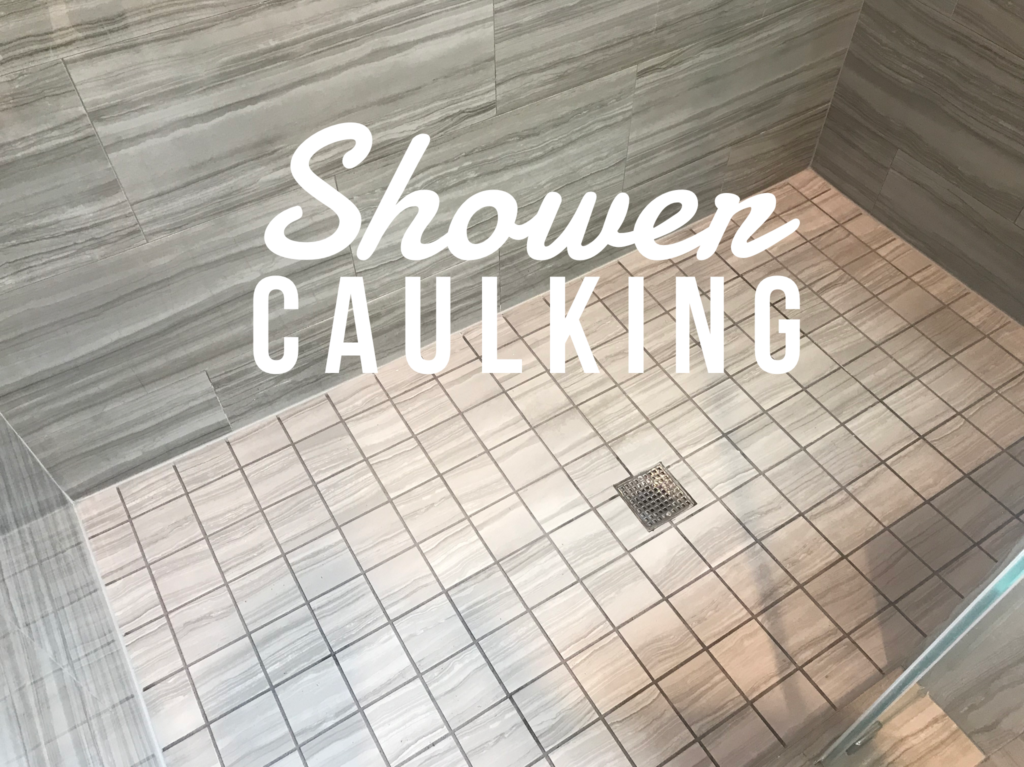


How we remove and replace shower caulk
We start with the condition of the joint, not the caulk gun. Old material, soap residue and trapped moisture can keep a fresh bead from adhering. If you are doing the work yourself, set aside time for removal and drying as well as application. You can also follow our shower recaulking video alongside these steps.
- Clean the shower, including soap and hard-water buildup near the joint. We recommend cleaning the tile and grout before recaulking.
- Cut along the upper and lower edges of the old bead, then lift out the loosened caulk. Work carefully around the adjoining surfaces.
- Remove remaining pieces and residue. Vacuum the joint so fragments do not get caught under the replacement bead.
- Clean the exposed area and let it dry completely. Our preparation includes wiping the cleared joint with mineral spirits and a rag.
- Place painter’s tape along both sides of the seam if you want help controlling the bead. Cut the caulk-tube tip at an angle, starting with a small opening.
- Apply one line at a time, smooth it with a caulk finishing tool and wipe the tool between passes. Keep the shower out of use while the product cures.
Remove residue without damaging the surface
After cutting out a bead, thin silicone remnants can remain on the sides of the joint. Lift loose pieces first, then work gently on the residue instead of pressing harder with a blade. A plastic edge is a lower-risk starting point beside a surface that scratches easily, such as an acrylic tub. On tile, keep any blade controlled and away from vulnerable finishes and grout. If a piece lifts freely, you may be able to peel it by hand rather than use a metal scraper.
Check the surface and remover labels before using a chemical caulk remover. A product such as Goo Gone may require additional cleanup, and an oily film can interfere with the next bead. Follow the product’s removal and rinse directions, then leave the joint clean and dry. Wear appropriate hand protection and provide ventilation when using cleaning products or mineral spirits. Do not mix cleaning chemicals.
Prepare a clean, fully dry joint
A shower can look dry while water still seeps from a newly opened wall joint. We do not apply fresh caulk to a damp seam: moisture can prevent adhesion. After cleaning and removing debris, check the entire exposed joint, including corners and the base, for visible water or recurring dampness. If water continues to emerge, wait for it to stop and for the area to dry rather than choosing an arbitrary number of hours.
For our shower cleaning and caulking work, we use a blend of Australian tea tree oil, peroxide and green cleaning products to disinfect shower tile and grout before caulking. Cleaning removes buildup from the area where the new bead needs to bond; it does not replace the drying step.
Choose caulk for the joint and finish
Choose a product labeled for shower use and compatible with the surfaces it will touch. For a white or other non-clear finish, we have used DAP Quick Seal Ultra, a siliconized product that is easier to apply and clean up than 100% silicone. GE makes clear and white 100% silicone; we favor its clear silicone when replacing clear shower caulk, though 100% silicone is less forgiving to work with and is better suited to experienced application.
Sanded caulk can suit a shower where a textured look matters, but its rougher finish calls for regular cleaning and careful application. Match the replacement to the joint and the finish you want, rather than selecting solely by color.
Apply a controlled bead
Painter’s tape helps define both edges, especially when using sanded caulk or working around an uneven seam. Position it to leave room for a bead similar in width to the one you removed. If you work without tape, begin with the smallest practical opening in the tube tip, move steadily and smooth one short line before applying more. Wipe the finishing tool after each pass so excess caulk does not spread onto the tile or tub.
Keep water off the new caulk for at least 24 hours. Some products can take up to 72 hours to fully cure, so follow the cure instructions on the product you use before showering.
Shower floor joints need the right repair
At the shower floor, distinguish the perimeter where the floor meets a wall from the grout lines between floor tiles. A flexible caulk belongs at a joint between changing planes when that is the appropriate sealant for the installation; intact grout between tiles is not something to cover with a bead. Remove failed caulk from the perimeter, clean out the joint and let it dry before replacing it. If grout is loose, the floor stays wet or water repeatedly emerges from the joint, address that condition rather than sealing over it.
What affects recaulking cost
The work depends on how much caulk must be removed, how firmly residue is bonded, whether soap or hard-water buildup needs cleaning, and how long opened joints take to dry. Shower tile and grout cleaning is another consideration when buildup extends beyond the seam. We provide shower tile and grout cleaning and caulking services in Katy and the Houston area. For a free estimate and availability, call or text us at (832) 303-3546, or visit UpFront Home Services.
First Things First
Make sure the shower is clean and dry. I recommend steam cleaning the shower well and disinfecting it before recaulking, especially when hard water or soap buildup is clinging to the tile. If you don’t have a vapor steamer or opt to not hire a pro for the tile and grout cleaning in the shower, then do a deep cleaning with bleach to prep.
Cut The Caulk
What I like to do is take the flat razor and start from the top of the caulk and work my way from left to right going up then down the entire line. Then I work from the bottom of the caulk by pushing the blade in and then out and working my way down the line. Clean up the area as best you can by removing as much of the remaining debris as possible with both the flat razor and the painters knife.
Vacuum The Area
Make sure to vacuum the area really well to get the chunks of caulk that are remaining. You don’t want to start caulking in an area that has debris remaining.
Make Sure Its Dry
Making sure that the area you’re caulking is dry is absolutely crucial. Sometimes water will continue to seep out of the walls for days after removing the caulk. It’s important for the area to be dry so that you can apply the fresh caulk or else the caulk simply won’t stick. Believe me it’s a mess when you mix water and caulk, don’t do it.
Treat The Area With Mineral Spirits
Once the caulk has been removed and the area vacuumed I like to treat the area with mineral spirits and a rag. The reason is it cleans the dust and debris and preps the surface for adhesion. If you’re having your shower cleaned as well we will treat the entire shower with an Australian Tea Tree Oil to naturally disinfect the shower before caulking the next day.
Tape Off The Area To Be Caulked
Apply your painters tape to the bottom and top of the seam line where you want your caulking to go. You don’t want them to be too close or too far apart, try to match the size of the bead that was previously in your shower. This is the most important part to make your shower look it’s very best. Some of the most experienced caulking professionals still tape off showers because it makes their job that much easier.
Cut The Tip and Apply The Caulk
Cutting the tip on the caulking tube is very important. You have to cut the tip at an angle and at an appropriate size. There are little hash marks on the head of the caulk tube, cut the smallest size and go larger if you feel the need to. From here you will put the caulk in the caulk gun and slowly apply to one area at a time.
Spread The Caulk
Take your caulk finishing set and slowly spread the caulk. I like to work by applying and spreading one line at a time so that the caulk doesn’t harden on me. After each swipe wipe your tool with a towel as to not spread unwanted caulk in the wrong areas.
No Showering
No Showering for at least 24 hours. Depending on the caulk you used it can take up to 72 hours to fully cure. It’s very important not to get the caulk wet while it cures or you could have a giant mess on your hands.
Bonus Tips
I’m personally a fan of Dap Quick Seal Ultra for white or other colors other than clear(it’s what I used in my own shower) it applies like an acrylic / latex based caulk but it is siliconized and has an anti-microbial built in. It’s very easy to work with and clean up if messes happen.
GE also makes a very good Clear and White 100% Silicone. 100% silicone I recommend only for professional use. The reason why I recommend silicone for professional use is because it is more difficult to work with and less forgiving than Dap Quick Seal Ultra. That said, if you are replacing clear caulk in the shower then GE Clear silicone is the best of the best. GEs white silicons is fantastic but I don’t recommend it for DIY use.
Sanded Caulk is also a great option in showers but this can be a DIY nightmare unless you tape off the shower before you caulk. The reason sanded caulk is used in some showers is it’s more aesthetically pleasing than just plain white or clear caulk. It’s not my favorite caulk because I don’t feel it protects from mildewing as well because there are more rough patches to stick to. But if you keep up with regular weekly shower cleanings and after shower treatments, this caulk will last a long time.