
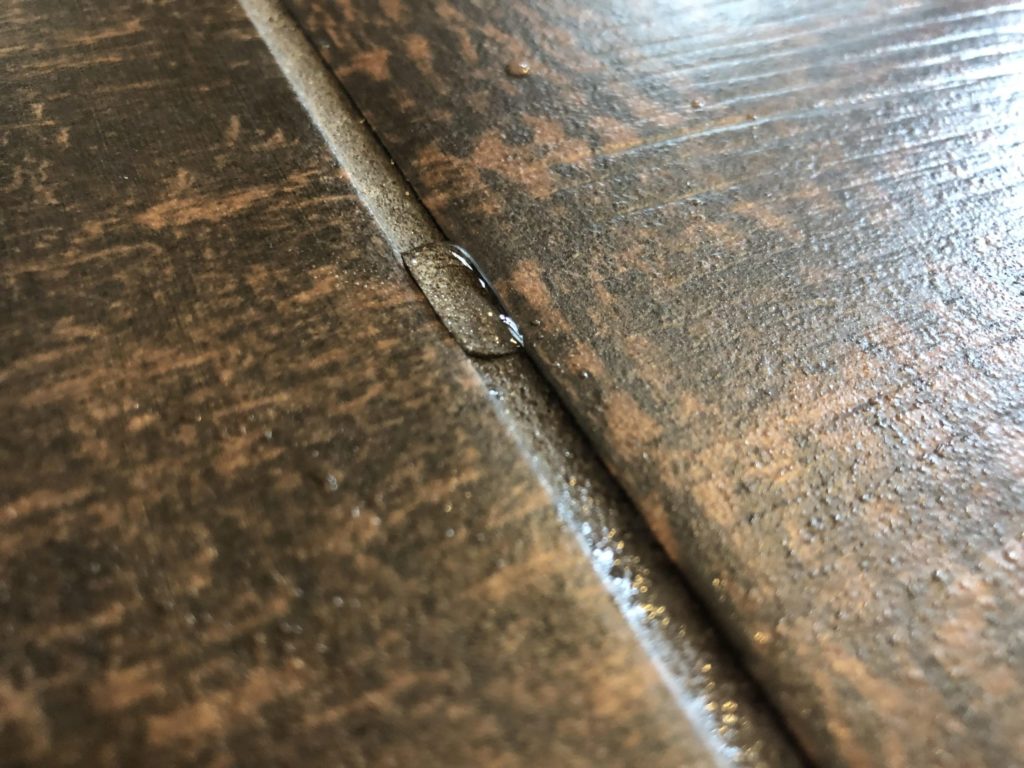


When sealing helps
Clean, porous cement-based grout can benefit from sealing. A compatible sealer slows the absorption of spills and can make routine cleanup easier, particularly on floors exposed to tracked-in dirt or frequent spills. Epoxy grout generally does not need the same sealing treatment. Sealer does not repair loose, cracked or missing grout, so damaged joints need attention before sealing is a useful maintenance step.
Sealing does not make grout waterproof or stain-proof. Spills can still leave marks, and a sealed floor still needs cleaning. In a shower, grout sealer does not replace the waterproofing behind the tile or fix a leak.
How we clean and seal tile and grout
We clean tile and grout using pressure and steam, then use alkaline and acid rinses before sealing the grout. The grout must be clean and dry before sealer is applied: residue can interfere with the result, and moisture can affect how sealer takes. Acidic products are not suitable for every tile material, including some natural stone, so the material matters when planning the cleaning.
We include grout sealing at no additional charge with our tile and grout cleaning. When you compare cleaning estimates, check whether sealing is included and whether the work accounts for the tile material and grout condition.
What affects drying, results and cost
Drying before sealing depends on how much water the grout absorbed, the depth and condition of the joints, ventilation and humidity. Humid conditions in Houston and Katy can slow drying. The grout needs to meet the sealer manufacturer's drying requirements, rather than a fixed wait measured from the end of cleaning.
The size of the tiled area, buildup, grout condition and access all affect the cleaning work. Damage or a previous coating can also change what is needed before sealing and what result to expect. We provide free estimates for Houston, Katy and the surrounding Houston area. Call or text (832) 303-3546, or visit UpFront Home Services.
Choosing a grout sealer
Choose by the grout and adjacent tile, not by a product's claim to be best for every surface. A penetrating sealer is intended to absorb into a suitable porous surface; a topical sealer forms a surface coating. Check the product label for grout and tile compatibility, preparation requirements and whether an existing coating affects application. If the grout is cracked or missing, a different sealer will not solve that problem.
Caring for cleaned and sealed grout
For routine floor care, we recommend a neutral floor cleaner, such as Zep Neutral Floor Cleaner or Crystal Clean by Stone Pro. Wipe up spills instead of leaving them on the joints. If you use a steam mop, follow the mop, tile and sealer manufacturers' care directions; heat and repeated moisture do not suit every finish. We recommend distilled water in a steam mop to help avoid mineral scale from tap water in the machine and on grout.
Watch for clean grout that begins absorbing spills more readily or becomes harder to clean than it was after sealing. Those changes can prompt a closer look at the sealer's reapplication directions; they do not establish a universal resealing date.